






Summary:
Ahead of China’s Spring Festival holiday (February 15–23), the phosphorus fertilizer chain is entering a typical pre-holiday window. Public information and industry monitoring indicate that upstream producers are managing operating loads cautiously through maintenance scheduling and shipment control, while expectations for spring application demand are gradually strengthening. Under the push–pull between costs and demand, MAP, DAP and compound fertilizers are moving into a phase of price-offer and transaction adjustments.
Yellow Phosphorus Remains Range-Bound Under Load Management
Recent industry analysis on the 2026 yellow phosphorus market suggests a lack of clear one-directional drivers in the short term. Expectations of capacity additions and supply recovery cap upside potential, while limited pre-holiday downstream restocking constrains demand momentum. As a result, the market is characterized by supply–demand negotiation and range-bound pricing.
Ahead of the holiday, producers are focusing on safety, energy considerations, and maintenance planning, making operating loads and inventory management key factors shaping spot availability.
Phosphoric Acid Pricing Remains Cost-Led
As a key intermediate, phosphoric acid pricing continues to be driven primarily by feedstock and energy costs. Public financial reporting citing industry monitoring highlights market focus on input costs—such as yellow phosphorus, sulfur, and ammonia—as well as the impact of maintenance schedules on short-term supply.
At this stage, phosphoric acid price movements largely reflect cost pass-through rather than demand-led increases.
Structural Adjustments in MAP, DAP and Compound Fertilizers
According to price monitoring data released by the National Bureau of Statistics of China, phosphate fertilizers and compound fertilizers showed structurally mixed price movements in January 2026 rather than a uniform trend. MAP and DAP prices displayed an upward bias, while compound fertilizers traded within a relatively high but range-bound band.
This pattern aligns with industry expectations for the pre-holiday period: spring demand supports the market, while cashflow and logistics constraints ahead of the holiday keep transactions cautious.
Pre-Holiday Decisions May Set the Post-Holiday Baseline
Based on official monitoring and industry analysis, several pre-holiday factors are expected to shape the post-holiday market baseline:
- Maintenance schedules and operating-load decisions;
- Pre-holiday inventory levels and shipment planning;
- The pace at which spring demand materializes after the holiday.
For international buyers, understanding how China’s Spring Festival affects production and logistics is essential when assessing Q1 supply stability.
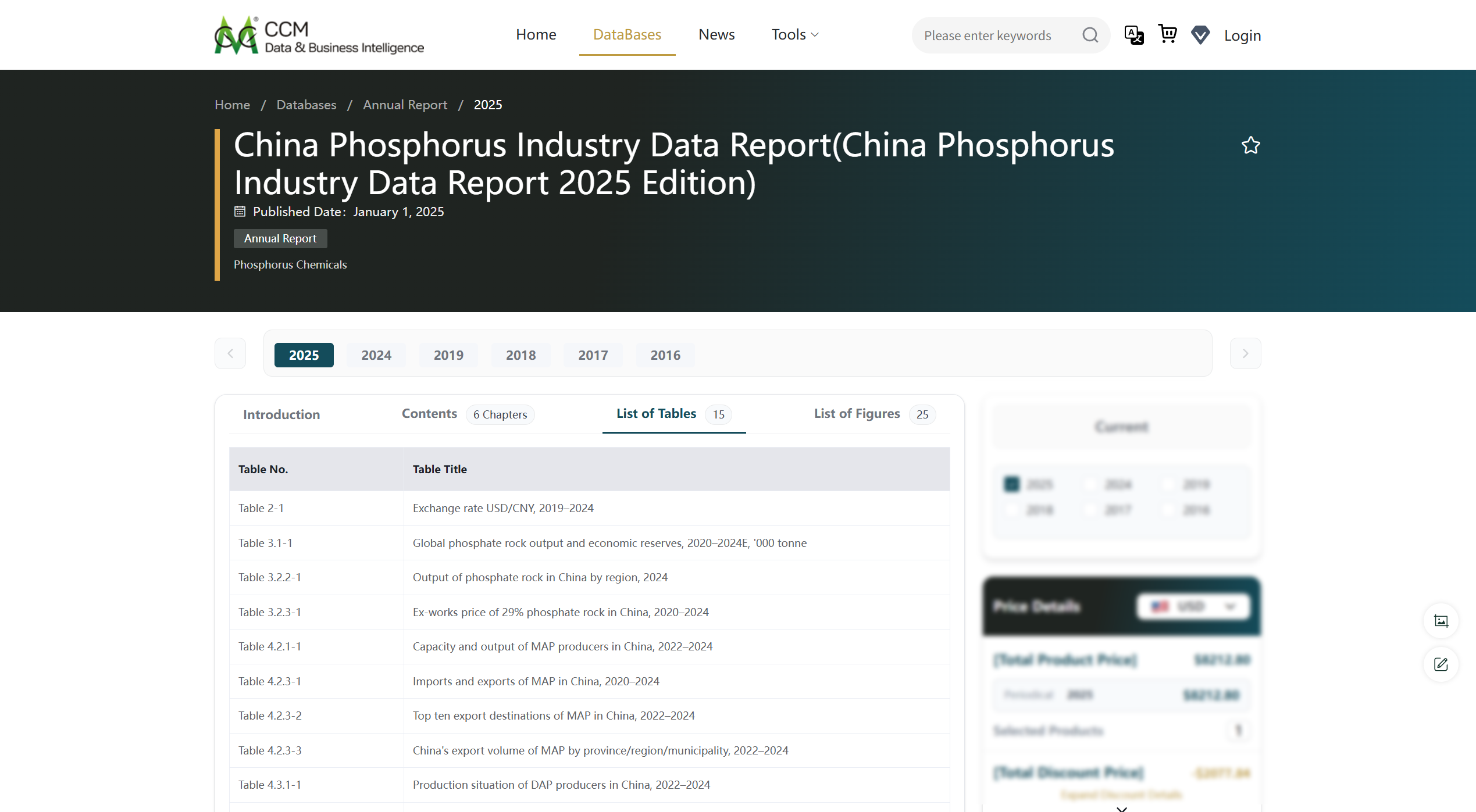
To provide a structured view of China’s phosphorus industry—including supply–demand balance, capacity distribution, price evolution, and trade dynamics, CCM has recently released the China Phosphorus Industry Data Report 2025 Edition. Built on long-term databases and continuous tracking, the report covers yellow phosphorus, phosphoric acid, and key phosphate fertilizers, supporting data-driven decision-making in procurement, pricing, and market strategy.
About CCM
CCM is the leading market intelligence provider for China’s agriculture, chemicals, food & feed and life science industries. Founded in 2001, CCM provides price monitoring, trade analysis and customized market research.CCM also offers advertising and promotional services for food ingredient and sweetener suppliers, helping companies enhance visibility and connect with targeted global buyers.
Website: www.cnchemicals.com | Email: econtact@cnchemicals.com | Tel: +86-20-37616606



 +86 20 3761 6606
 econtact@cnchemicals.com
 Mon - Fri, 9AM - 6PM
